Streamline Green Apps with Recycling Trends Templates
Launching a mobile application focused on sustainability requires more than just a functional backend; it demands an interface that immediately communicates your mission. For developers and designers working in the environmental sector, the visual language of the app is as critical as the code itself. This is where specialized design assets become indispensable. The Trash Recycling Trends Templates Bundle offers a curated collection of resources specifically engineered to help creators build compelling onboarding experiences for eco-conscious platforms. By utilizing pre-designed vector templates, professionals can bypass the initial creative block and focus on refining user experience and functionality.
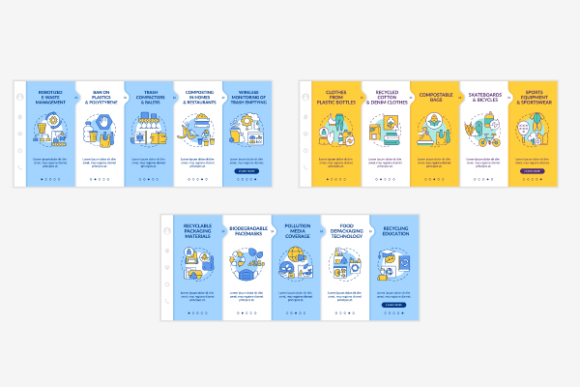
The modern user expects a seamless journey from the moment they download an app. In the context of waste management and recycling education, the onboarding process sets the tone for engagement. If the initial screens are cluttered or confusing, users are likely to abandon the app before understanding its value. This bundle addresses that challenge by providing a comprehensive set of trash recycling trends onboarding vector templates. These assets are not generic placeholders; they are thoughtfully constructed to guide users through the essentials of recycling habits, biodegradable production concepts, and sustainable living practices.
Accelerating Design Workflows with Vector Precision
Time is often the most scarce resource for freelancers, small business owners, and marketing teams. Creating high-fidelity illustrations from scratch can consume dozens of hours, delaying launch dates and increasing project costs. The primary advantage of adopting the Trash Recycling Trends Templates Bundle lies in its ability to drastically reduce production time without compromising quality. Each element within the collection is crafted using scalable vector graphics, ensuring that icons, characters, and background elements remain crisp on any device, from the smallest smartphone screen to large desktop monitors.
The inclusion of multiple file formats—AI, EPS, SVG, PNG, and JPEG—ensures compatibility with virtually every design software in the industry. Whether you are an Adobe Illustrator veteran or prefer working in Sketch or Figma (via SVG import), these files integrate smoothly into existing workflows. This flexibility allows designers to customize colors, adjust line weights, or rearrange components to match specific brand guidelines. For instance, a municipality launching a new waste sorting initiative might need to adapt the color palette to match their official branding, while a private startup might opt for a vibrant, energetic look to appeal to younger demographics. The linear illustration style provided in this bundle serves as a neutral yet modern foundation that adapts well to various aesthetic directions.
Visualizing the User Journey: A Five-Step Walkthrough
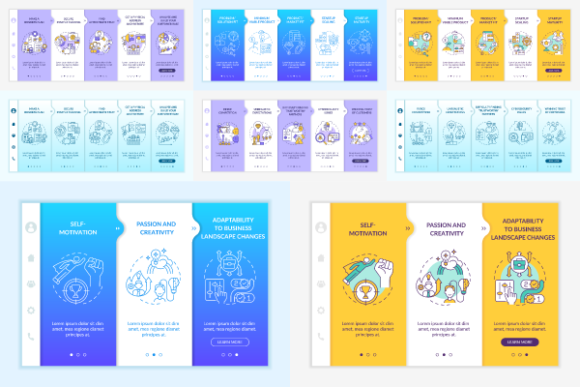
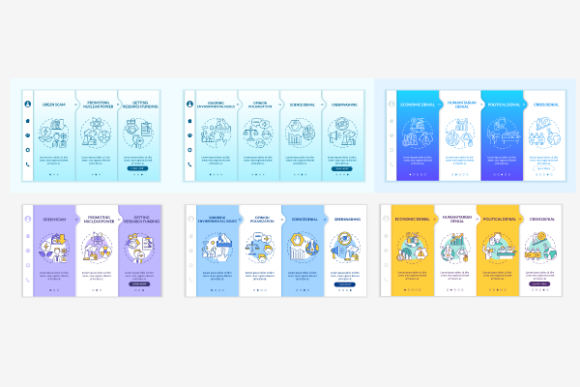
Effective onboarding is rarely a single screen; it is a narrative. To maximize user retention, apps often employ a multi-screen walkthrough that educates the user on key features before they reach the dashboard. This collection includes a structured web page walkthrough consisting of 5 step screens, designed to tell a cohesive story about recycling and sustainability.
Consider how these five screens can be utilized to educate users effectively:
- Screen One: The Problem Awareness. Use the linear illustrations to depict common waste scenarios, helping users recognize the impact of improper disposal.
- Screen Two: The Solution Introduction. Introduce the app's core function, such as identifying recyclable materials or locating nearby drop-off points, using clear, friendly icons.
- Screen Three: Biodegradable Concepts. Leverage the biodegradable production color concept to explain the difference between compostable and non-compostable items, a frequent point of confusion for consumers.
- Screen Four: Community Impact. Show visuals of collective effort, reinforcing the idea that individual actions contribute to a larger environmental goal.
- Screen Five: Call to Action. A final encouraging screen that invites the user to start their journey, perhaps offering a reward or a first task to complete.
This structured approach ensures that the user is not overwhelmed with information. Instead, they are guided logically through the app's value proposition. For educators and publishers creating digital content, these screens can also serve as standalone infographic elements for social media campaigns or blog posts, extending the utility of the bundle beyond just app development.
The Power of Biodegradable Color Concepts
Color psychology plays a subtle but powerful role in how users perceive environmental topics. The biodegradable production color concept embedded in these templates utilizes a palette that evokes nature, cleanliness, and renewal. Typically involving shades of organic green, earthy browns, and clean blues, this color strategy helps establish trust and authenticity. When users see these colors, they subconsciously associate the app with genuine ecological efforts rather than "greenwashing."
Furthermore, the use of linear illustrations contributes to a sense of clarity and simplicity. Waste management can be a complex and sometimes grim topic. Linear art strips away unnecessary detail, focusing on the essence of the object or action. This minimalist approach reduces cognitive load, making it easier for users to process information quickly. For marketers and bloggers, this style is particularly effective because it translates well across different mediums, maintaining its legibility even when scaled down for mobile notifications or social media thumbnails.
Who Benefits Most from This Collection?
While the Trash Recycling Trends Templates Bundle is versatile, certain groups will find exceptional value in its specific offerings. App developers and UI/UX designers are the primary beneficiaries, as they gain immediate access to production-ready assets that solve the "blank canvas" problem. Environmental NGOs and non-profits often operate with limited budgets; purchasing a comprehensive bundle is far more cost-effective than hiring an illustrator for custom work, allowing them to allocate funds toward program implementation instead.
Small business owners in the sustainability sector, such as zero-waste shops or composting services, can use these templates to create professional-looking brochures and digital presentations. The bundle's inclusion of brochure templates and infographic elements means that a business can maintain a consistent visual identity across both their physical and digital marketing materials. Additionally, educators can utilize the vector templates to create engaging teaching materials for schools, helping the next generation understand the importance of recycling through visually appealing content.
Practical Considerations and Limitations
While this bundle offers significant advantages, it is important to approach its usage with a strategic mindset. Pre-made templates provide a strong foundation, but they should not replace unique branding entirely. To stand out in a crowded market, users should customize the provided assets. This might involve combining elements from different screens, altering the color hues to better fit a specific brand identity, or adding custom typography. Relying solely on the default settings may result in a product that looks similar to others using the same pack.
Additionally, while the vector files are scalable, the complexity of linear illustrations means they require a certain level of design proficiency to modify effectively. Users unfamiliar with vector editing software may need to invest time in learning the basics of tools like Adobe Illustrator or seek assistance from a designer to make advanced adjustments. However, for those willing to put in the effort, the return on investment is substantial. The ability to rapidly prototype and iterate on designs allows for faster testing and optimization of the final product.
Elevating Quality with BSD Studio Resources
Finding reliable design resources can often feel like searching for a needle in a haystack. BSD Studio aims to simplify this process by providing a diverse array of products tailored to specific needs. The philosophy behind their shop is to ensure creators can save time on design work while maintaining top-tier quality. By offering a wide variety of topics and file types, they ensure that there is always something new and relevant for professionals looking to stay ahead of design trends.
The Trash Recycling Trends Templates Bundle exemplifies this commitment. It is not merely a collection of images; it is a toolkit for communication. Whether you are building a responsive mobile website, designing an educational brochure, or crafting an infographic for a corporate sustainability report, these assets provide the structural integrity needed for professional results. In a world where visual content drives engagement, having access to high-quality, thematic templates can be the difference between a project that stalls and one that succeeds.
Ultimately, the goal of any design asset is to empower the creator. By handling the heavy lifting of illustration and layout structure, this bundle frees up mental energy for strategy, user research, and content refinement. For anyone dedicated to promoting sustainability through digital channels, integrating these vector templates into their workflow is a practical step toward achieving greater efficiency and impact.