Streamlining Your Brand Identity with a Lavender Flowers PSD DIY Logo
In the current digital landscape, establishing a distinct visual identity is no longer a luxury reserved for large corporations with massive marketing budgets. For freelancers, small business owners, and creative entrepreneurs, the ability to produce professional-grade assets quickly and cost-effectively is a critical component of operational efficiency. This is where a specialized asset like a Lavender Flowers, PSD DIY Logo becomes more than just a graphic; it serves as a foundational element in a broader branding workflow. By leveraging high-quality, editable templates, creators can bypass the lengthy and expensive process of commissioning custom illustration while still achieving a unique, polished look that resonates with their target audience.
The integration of pre-designed elements into a personal or commercial project requires a strategic approach. It is not merely about downloading a file and printing it; it is about understanding how this asset fits into your specific timeline, whether you are launching a new product line, refreshing an existing brand, or creating bespoke invitations for a special event. The versatility of a template that combines botanical aesthetics with technical flexibility allows for seamless adaptation across various mediums, from web design to physical stationery.
Understanding the Asset and Its Role in Your Workflow
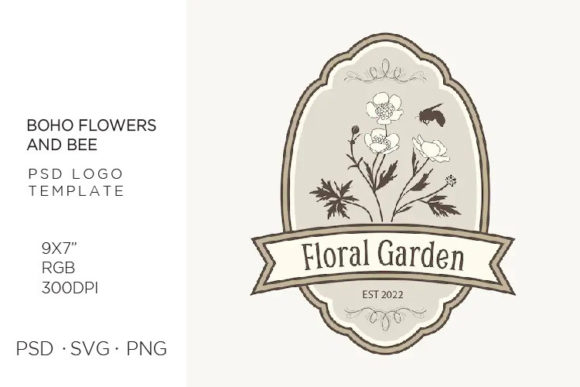
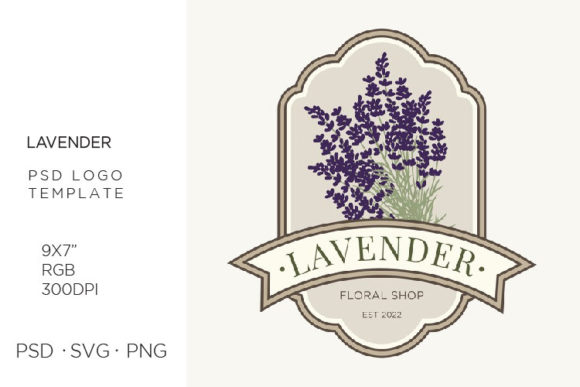
At its core, a Lavender Flowers, PSD DIY Logo is a layered digital file designed for maximum editability. Unlike flat image files that lock you into a specific design, a Photoshop (PSD) template provides the structural integrity of a professional logo with the freedom to customize every detail. When you acquire a package that includes a 9 x 7 inch PSD template at 300 DPI, you are gaining access to a high-resolution canvas where text, color, and composition can be altered to match your specific brand guidelines.
This type of asset fits primarily into the preparation and execution phases of a creative project. Before you begin designing marketing materials or setting up your online store, you need a central visual anchor. Using a DIY logo template accelerates this phase significantly. Instead of waiting weeks for a designer to deliver initial concepts, you can iterate on the design immediately. You can test different font pairings, adjust the shade of purple to match your website's hex codes, or rearrange the floral elements to better fit a square social media profile picture.
Furthermore, the inclusion of supplementary files such as an SVG vector (22 x 17 inch) and PNG files (5 x 6 inch) ensures that the asset is compatible with a wide range of software and output requirements. The SVG file, being vector-based and without text or background, is crucial for scalability. It allows you to enlarge the emblem for large-format printing, such as banners or signage, without any loss of quality. This interoperability means the logo can move fluidly between different stages of your workflow, from digital mockups to final print production.
Strategic Implementation Across Different Projects
The utility of a Lavender Flowers, Boho Flowers - Emblem extends far beyond a simple website header. Its application depends heavily on the nature of your project and the stage of your business cycle. For instance, if you are a wedding planner or a stationery designer, this asset can be integrated directly into client deliverables. The "Boho" aesthetic is particularly prevalent in the wedding and event industry, making this template an ideal starting point for invitation suites, save-the-date cards, and party decor.
Consider a scenario where you are launching a line of handmade soaps or essential oils. The lavender motif naturally aligns with products focused on relaxation, wellness, and natural ingredients. In this context, the logo template acts as the primary packaging element. You would use the editable PSD to insert your brand name using the included free fonts or a licensed typeface of your choice. Once the design is finalized, the high-resolution PNG files can be sent directly to a label printer, while the SVG file can be used to create a stamp or embossing tool for a tactile, premium unboxing experience.
For bloggers and content creators, the workflow involves adapting the logo for various digital touchpoints. The process might look like this:
- Website Integration: Use the transparent PNG for your site header and favicon to ensure fast loading times and crisp display on retina screens.
- Social Media Consistency: Adapt the layout in the PSD file to create profile pictures, story highlights covers, and post watermarks, ensuring brand consistency across platforms like Instagram, Pinterest, and TikTok.
- Digital Products: If you sell planners or ebooks, embed the logo into the cover designs and internal chapter headers to reinforce brand ownership and professionalism.
The key to successful implementation is viewing the template not as a finished product, but as a modular component. It interacts with other tools in your stack, such as Canva for quick social graphics, Adobe Illustrator for complex vector manipulation, or printing software for physical goods. The presence of layer groups in the PSD file facilitates this interaction, allowing you to isolate specific elements (like the flowers separate from the text) and export them for use in other applications.
Technical Considerations for Quality and Consistency
Maintaining high standards of quality control is essential when using DIY templates. While the convenience is undeniable, the responsibility for the final output rests on the user. One of the most common pitfalls is ignoring resolution requirements. The provided files are optimized at 300 DPI, which is the industry standard for print. However, if you inadvertently resize the canvas in your editing software without maintaining this resolution, the final print may appear pixelated or blurry. Always verify your document settings before exporting final files for production.
Typography is another critical factor. The package typically includes free fonts, which are convenient for immediate use. However, for a truly unique brand identity, consider licensing a premium font that complements the provided typeface. When swapping fonts in the PSD, pay close attention to kerning (the space between characters) and leading (the space between lines). The original designer balanced these elements for the default font; changing the typeface often requires manual adjustment to maintain visual harmony.
Color management is also vital, especially when moving between digital and print mediums. Screens display color in RGB (Red, Green, Blue), while printers use CMYK (Cyan, Magenta, Yellow, Key/Black). A vibrant lavender on your monitor may print as a dull grayish-purple if not properly converted. Before sending files to a professional printer, convert your PSD to CMYK mode and review the color proof. This step ensures that the "Lavender" in your logo remains true to your brand vision in the physical world.
Optimizing Organization and Long-Term Usability
To maximize the value of your purchase, organize your digital assets effectively from day one. Create a dedicated folder structure on your drive or cloud storage. A recommended hierarchy might include subfolders for "Source Files" (containing the PSD and AI/SVG), "Exports" (for PNGs and JPEGs ready for use), and "Fonts" (containing the installed typefaces). This organization saves time when you need to revisit the project months or years later for a rebrand or a new marketing campaign.
Long-term usability also involves version control. As your business evolves, your logo might need subtle tweaks. Because you have the editable PSD, you can create variations for different seasons or promotions without losing the core identity. For example, you might create a monochromatic version for faxed documents or a simplified icon-only version for mobile app icons. Keeping these variations saved as separate layers within the master PSD file ensures that you always have access to the most up-to-date brand assets.
Moreover, understanding the licensing terms of the template is part of responsible usage. Most DIY logo templates allow for commercial use in end products (like printed shirts or logos for your own business) but restrict the resale of the template itself in its original or slightly modified form. Adhering to these guidelines protects you legally and supports the creator community.
Final Thoughts on Integration
Incorporating a Lavender Flowers, PSD DIY Logo into your workflow is a practical decision that balances aesthetic appeal with operational efficiency. It empowers you to take control of your brand's visual narrative without the bottleneck of external dependencies. Whether you are crafting handmade cards, designing a website, or labeling artisanal products, this asset provides the structural foundation needed to execute your vision professionally.
By focusing on preparation, respecting technical specifications, and organizing your files logically, you transform a simple download into a robust branding tool. The result is a cohesive, professional image that communicates quality and intentionality to your audience, proving that effective design is as much about smart process management as it is about artistic flair.