Evaluating Prairie Flowers Urinary Tract System Art for Creative and Medical Projects
The intersection of medical anatomy and botanical illustration has created a unique niche in digital design, exemplified by the Prairie Flowers Urinary Tract System Art. This specific graphic style merges the clinical precision required for anatomical accuracy with the aesthetic softness of blooming flora. For designers, medical professionals, and crafters, understanding the utility and limitations of this art form is essential before integrating it into projects ranging from educational materials to personalized decor.
Understanding the Design Concept
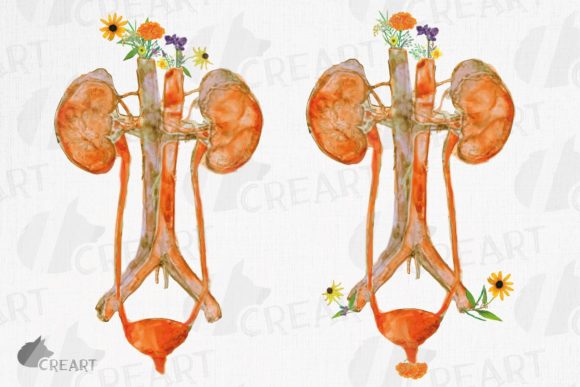
At its core, this art style features a detailed representation of the human urinary tract system, including the kidneys, ureters, bladder, and urethra. However, rather than presenting these organs in a sterile, traditional medical diagram format, the structures are adorned with or composed of prairie flowers. The result is a floral human kidney and bladder clip art that softens the visual impact of internal anatomy while maintaining recognizability.
This approach serves a dual purpose. First, it retains enough anatomical fidelity to be useful in urology-related contexts, such as patient education or office decoration. Second, the floral elements transform the image into a piece of art suitable for broader applications where a standard medical diagram would feel too clinical or stark. The "prairie" aspect suggests a specific palette and flower type—often featuring coneflowers, black-eyed Susans, or wild grasses—which adds a rustic or naturalistic touch to the design.
Practical Applications and Use Cases
The versatility of Prairie flowers blooming anatomical urinary tract system graphic design lies in its adaptability across various mediums. Because the artwork often bridges the gap between professional medical imagery and decorative art, it fits several distinct scenarios:
- Medical Office Decor: Urologists and nephrologists may seek to create a more welcoming environment. Using this art for wall decor can reduce patient anxiety associated with clinical settings while still reinforcing the specialty of the practice.
- Educational Materials: For nursing students or patient handouts, the floral overlay can make complex anatomical structures more approachable and memorable, provided the key structural lines remain visible.
- Personalized Gifts: The design is highly effective for creating gifts for doctors, nurses, or medical graduates. Items like mugs, tumblers, or tote bags featuring this art serve as meaningful tokens of appreciation that acknowledge their profession without being overly graphic.
- Event Stationery: Unconventional events, such as medical school graduation parties or retirement gatherings, can utilize these graphics on invitations and cards to establish a thematic tone.
- Sublimation and Crafting: Hobbyists using sublimation printers can transfer these designs onto clothing, stickers, or scrapbooking pages. The organic nature of the flowers complements fabric textures well.
Technical Considerations and File Formats
When evaluating a digital download package for this type of art, the file formats included are critical determinants of usability. A comprehensive package typically includes a variety of files to ensure compatibility with different software ecosystems.
Raster vs. Vector: High-resolution PNG files with transparent backgrounds are essential for web design and digital mockups. They allow the user to place the clip art over any color or texture without a white box surrounding the image. However, for physical production like large-scale wall decals or t-shirt printing, vector files are superior. Formats such as SVG, AI (Adobe Illustrator), and EPS (compatible with Corel Draw) allow the artwork to be resized infinitely without any loss of quality. This is particularly important if the design needs to be scaled from a small sticker to a large banner.
Layered Editing: The inclusion of a Photoshop (PSD) file with layered elements offers significant flexibility. It allows designers to adjust the positioning of specific flowers, change colors to match a brand palette, or isolate the kidneys from the bladder for separate uses. A PDF file is also valuable for quick viewing and standard printing tasks.
Users should verify that the purchased files do not contain watermarks, logos, or paper textures unless specifically desired. Clean, flat digital assets provide the most professional foundation for further customization.
Benefits and Tradeoffs
Adopting this specific artistic style offers clear advantages, but it also comes with inherent tradeoffs that buyers must consider.
Benefits: The primary benefit is the reduction of clinical sterility. Medical imagery can sometimes be unsettling for laypeople; the floral integration humanizes the anatomy. Furthermore, the uniqueness of the design helps brands and individuals stand out. In a sea of generic blue-and-white medical icons, a prairie flower-themed urinary tract system is distinctive and memorable. The availability of multiple file formats ensures that the asset is future-proof for various technological needs.
Tradeoffs: The main consideration is the balance between aesthetics and accuracy. Depending on the density of the floral elements, some fine anatomical details might be obscured. For strict diagnostic education or high-level surgical planning, a traditional, unadorned anatomical chart remains the gold standard. Additionally, the specific "prairie" aesthetic may not align with every brand identity. A modern, minimalist clinic might find the rustic floral style incongruent with their interior design, whereas a holistic health practitioner might find it perfect.
Decision-Making Insights
To determine if Prairie Flowers Urinary Tract System Art aligns with your goals, consider the intended audience and the medium of delivery.
If the goal is patient comfort or brand differentiation, this art style is a strong fit. It works exceptionally well for merchandise intended for non-medical audiences who have a connection to the field, such as family members of healthcare workers or patients celebrating recovery. The artistic element makes the subject matter less intimidating.
However, if the primary objective is technical precision for advanced medical training, alternatives may be worth considering. In these cases, a standard anatomical illustration with clear labeling and no artistic obstruction is preferable. Similarly, if the project requires a hyper-modern or corporate aesthetic, a more abstract or geometric representation of the urinary system might be more appropriate than the organic, rustic look of prairie flowers.
Ultimately, the value of this graphic design lies in its ability to soften the boundaries between science and art. By selecting the correct file formats and applying the imagery to suitable projects, users can leverage this unique blend of botany and biology to create engaging, empathetic, and visually striking content.