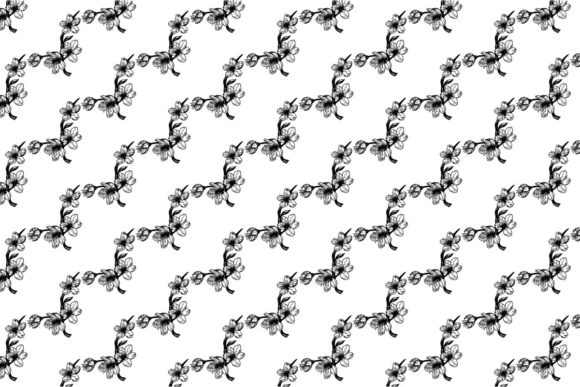
Choosing the Right Aesthetic: A Guide to Cherry Blossom Line Art Floral Patterns
In the vast landscape of botanical design, few motifs carry as much cultural weight and visual versatility as the Cherry Blossom Line Art Floral Pattern. For designers, textile artists, and homeowners looking to infuse spaces with a sense of transient beauty, understanding the nuances of this specific style is crucial. Unlike full-color watercolor paintings or hyper-realistic photography, line art strips the image down to its essential contours. This reductionist approach highlights the delicate structure of the sakura branch, the curve of individual petals, and the organic flow of the bloom without the distraction of complex shading or vibrant color palettes.
When evaluating design resources, it is important to distinguish between a simple outline and a true line art pattern. The latter relies on the interplay of positive and negative space, often utilizing varying line weights to suggest depth and texture. A well-executed Cherry Blossom Line Art Floral Pattern captures the essence of spring in Japan while remaining abstract enough to fit into modern, minimalist, or even industrial interiors. This guide explores how this style compares to other floral formats, where it excels, and the specific trade-offs you should consider before selecting it for your next project.
Line Art Versus Other Botanical Styles
The decision to use line art over other styles often comes down to the intended application and the desired emotional impact. When comparing Cherry Blossom Line Art Floral Pattern options against watercolor illustrations or digital paintings, distinct differences emerge regarding versatility and production costs.
- Watercolor and Painted Styles: These offer rich textures, soft gradients, and a romantic, dreamy quality. They are excellent for wedding invitations or high-end packaging where a hand-painted feel is paramount. However, they can be difficult to scale for large-format printing without losing resolution, and the complex colors may clash with existing brand palettes.
- Photorealistic Imagery: While stunning, photos of cherry blossoms are heavily dependent on lighting and background. They lack the stylized uniformity needed for seamless tiling in textiles or wallpapers. Furthermore, they often feel too literal for abstract design contexts.
- Geometric Patterns: Geometric sakura designs reduce the flower to shapes like circles and triangles. While modern, they often lose the organic "flow" that makes the cherry blossom recognizable. Line art sits comfortably between these extremes, retaining the natural silhouette of the branch and petal while offering the clean scalability of a vector graphic.
The primary advantage of the Cherry Blossom Line Art Floral Pattern is its adaptability. Because it is typically monochromatic or uses limited color, it can be easily recolored to match any scheme. A black ink sketch can become gold foil for luxury stationery, white embossing for dark fabric, or a soft pink for nursery decor. This flexibility makes it a superior choice for projects requiring consistency across different materials, such as branding kits that span from business cards to large banners.
Evaluating Format and Technical Specifications
Not all line art files are created equal. When sourcing assets, you will encounter two main formats: raster (JPEG, PNG) and vector (SVG, EPS, AI). Understanding the technical implications of each is vital for professional results.
Vector-based line art is generally the preferred choice for serious design work. Since vectors are defined by mathematical paths rather than pixels, a Cherry Blossom Line Art Floral Pattern in this format can be scaled infinitely without losing crispness. This is non-negotiable for large-scale applications like wallpaper, fabric rolls, or vehicle wraps. Vectors also allow you to edit individual strokes, meaning you can separate a falling petal from a branch or adjust the thickness of a line to suit your composition.
In contrast, raster line art is resolution-dependent. While high-resolution PNGs with transparent backgrounds are useful for web graphics or small print runs, they risk becoming pixelated if enlarged beyond their original dimensions. Raster files are often the result of scanning hand-drawn sketches. While they possess a unique, textured charm that mimics real ink on paper, they lack the editability of vectors. If your project involves creating a seamless pattern for textile manufacturing, a vector source file will save significant time in the repeat-building process.
Cultural Context and Symbolism in Design
Beyond aesthetics, the cherry blossom carries profound symbolic meaning, particularly in Asian cultures. In Japan, the sakura represents the fleeting nature of life, renewal, and the arrival of spring. In China, it is often associated with feminine beauty and love. When incorporating a Cherry Blossom Line Art Floral Pattern into a design, being aware of these connotations helps ensure the tone aligns with your message.
For instance, a minimalist line drawing of a single branch with falling petals might evoke a sense of melancholy or quiet reflection, suitable for a memorial service program or a contemplative book cover. Conversely, a dense, repeating pattern of full blooms suggests abundance, celebration, and vitality, making it ideal for wedding themes, New Year celebrations, or spring fashion collections. The "line art" style itself adds a layer of sophistication; it feels more curated and less generic than clip-art style flowers, lending an air of elegance and tradition to the final product.
Practical Applications and Best-Fit Scenarios
Determining whether this style is the right fit depends largely on the end product. Here are several scenarios where a Cherry Blossom Line Art Floral Pattern shines, along with situations where an alternative might be better.
Ideal Use Cases
- Textile and Fashion Design: The clean lines of this pattern work exceptionally well on fabric. Whether printed on silk scarves, cotton bedding, or summer dresses, the lack of heavy ink coverage ensures the material remains breathable and the design does not crack upon washing. The seamless nature of these patterns allows for continuous prints that wrap elegantly around garments.
- Stationery and Wedding Invitations: For couples seeking a romantic yet modern aesthetic, line art offers a perfect balance. It looks sophisticated on letterpress or foil-stamped invitations. The simplicity allows for easy customization with calligraphy fonts without the design feeling cluttered.
- Interior Decor and Wallpaper: In interior design, subtlety is often key. A large-scale line art mural can serve as a feature wall without overwhelming the room. Unlike busy photographic wallpapers, line art acts as a texture that complements furniture rather than competing with it.
- Tattoo Stencils and Temporary Art: The clear, bold lines of vector sakura art make it an excellent reference for tattoo artists or temporary henna/mehndi designs, where clarity of the outline is essential for application.
When to Consider Alternatives
While versatile, line art is not a universal solution. If your goal is to evoke the lush, vibrant energy of a full garden in peak bloom, a grayscale or single-color line drawing may feel too stark. In such cases, a watercolor or colored illustration with varied hues of pink, white, and green would better capture the depth and atmosphere of the scene. Similarly, if the target audience responds better to hyper-realism or 3D rendering—common in certain tech or automotive marketing contexts—a stylized line drawing might appear too abstract or "sketchy" to convey the necessary level of detail.
Making the Final Decision
Selecting the right floral asset requires balancing artistic vision with practical constraints. Ask yourself: Does the project require infinite scalability? Is the budget aligned with custom vector creation, or are pre-made assets sufficient? Do you need the design to be easily recolored for different seasonal campaigns?
A Cherry Blossom Line Art Floral Pattern is an outstanding choice when you need a design that is timeless, culturally resonant, and technically flexible. It bridges the gap between traditional botanical illustration and modern graphic design. However, success lies in choosing the right execution. Prioritize high-quality vector files for physical products to ensure sharpness, and consider the emotional weight of the imagery to ensure it matches your narrative. By understanding these distinctions, you can leverage the delicate beauty of the sakura to create designs that are both visually striking and deeply meaningful.